
Security Screen Doors
Premium protection for your family, custom-made for your home — security screen doors in marine-grade 316 stainless steel, tested to the standard that actually matters.
Engineered to give homeowners true peace of mind, every ScreenGuard screen door combines advanced WedgeMax™ technology, premium 316 stainless steel mesh and T6 extruded aluminium frames to deliver uncompromising protection for your home and your family.
Security Screen Door Range
Security screen doors come in a range of styles: hinged, sliding, French and bi-fold doors each custom designed and built to suit your home. Every ScreenGuard security screen door is made to measure by your local supplier, in a variety of applications and colours, so it fits your opening perfectly.
 Doors
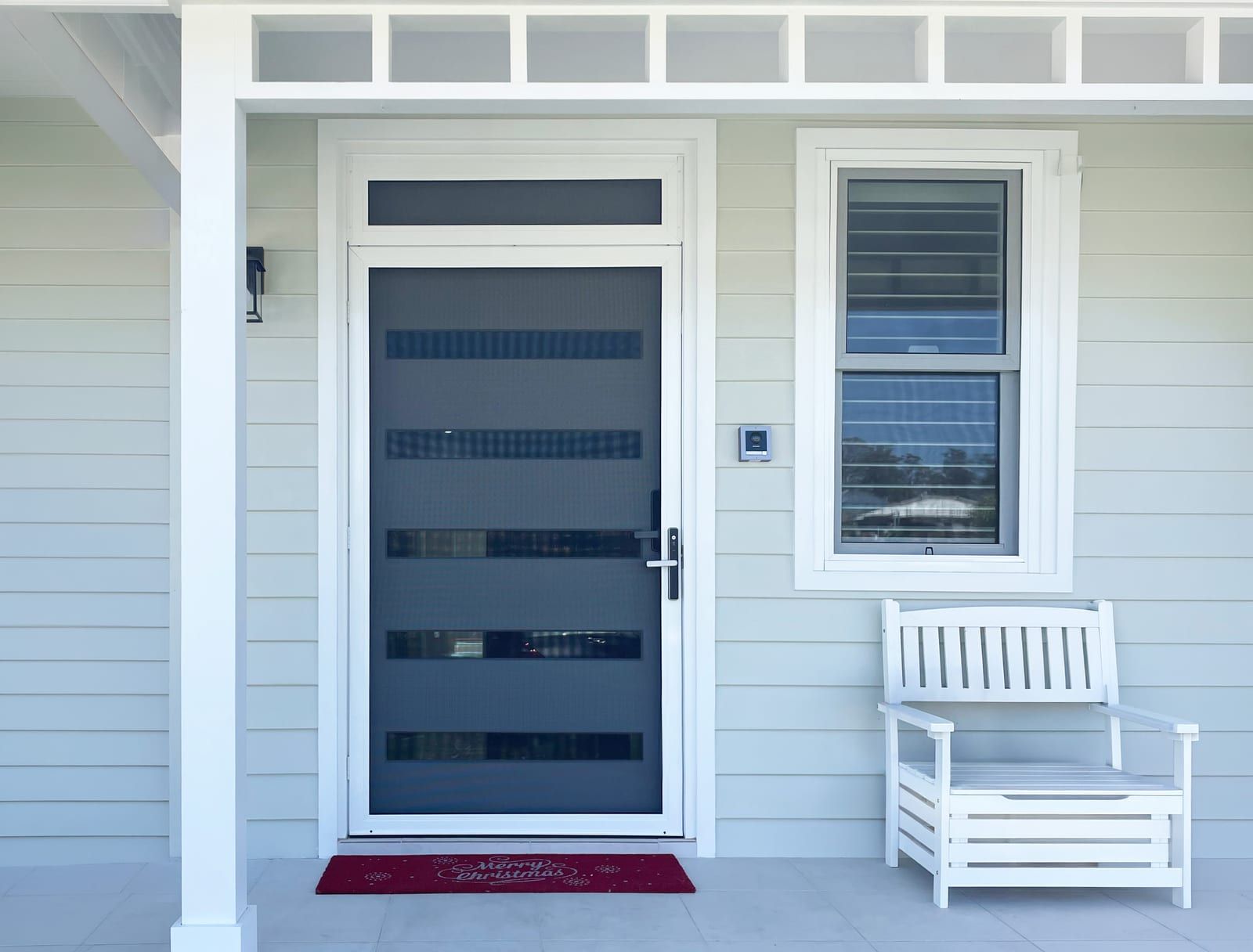
DoorsHinged Doors
Upgrade your home's entrance with a custom-made ScreenGuard hinged door that combines premium security with modern style.
 Doors
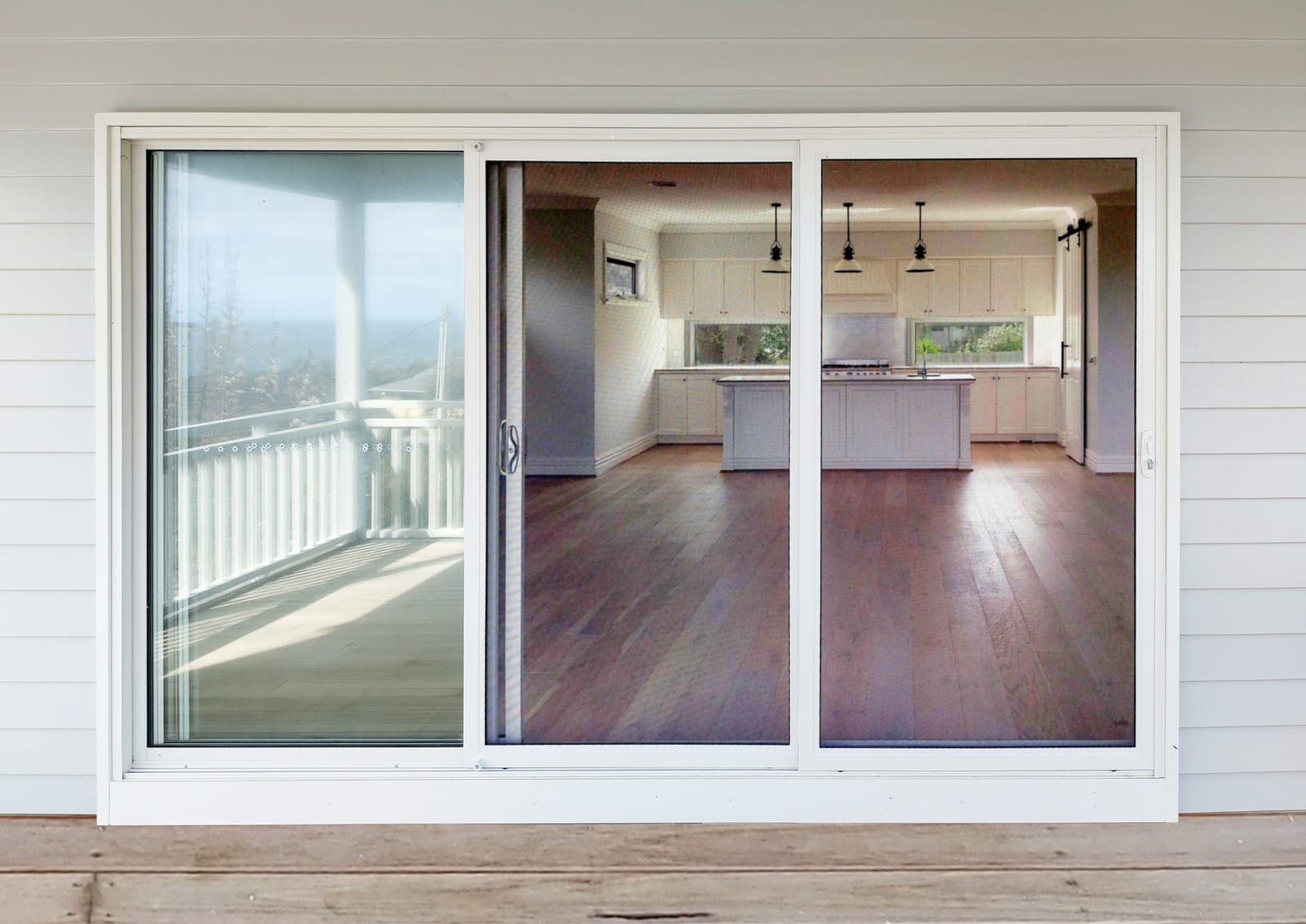
DoorsSliding Doors
Create a seamless connection between your indoor and outdoor living spaces with a custom-made ScreenGuard sliding security door.
 Doors
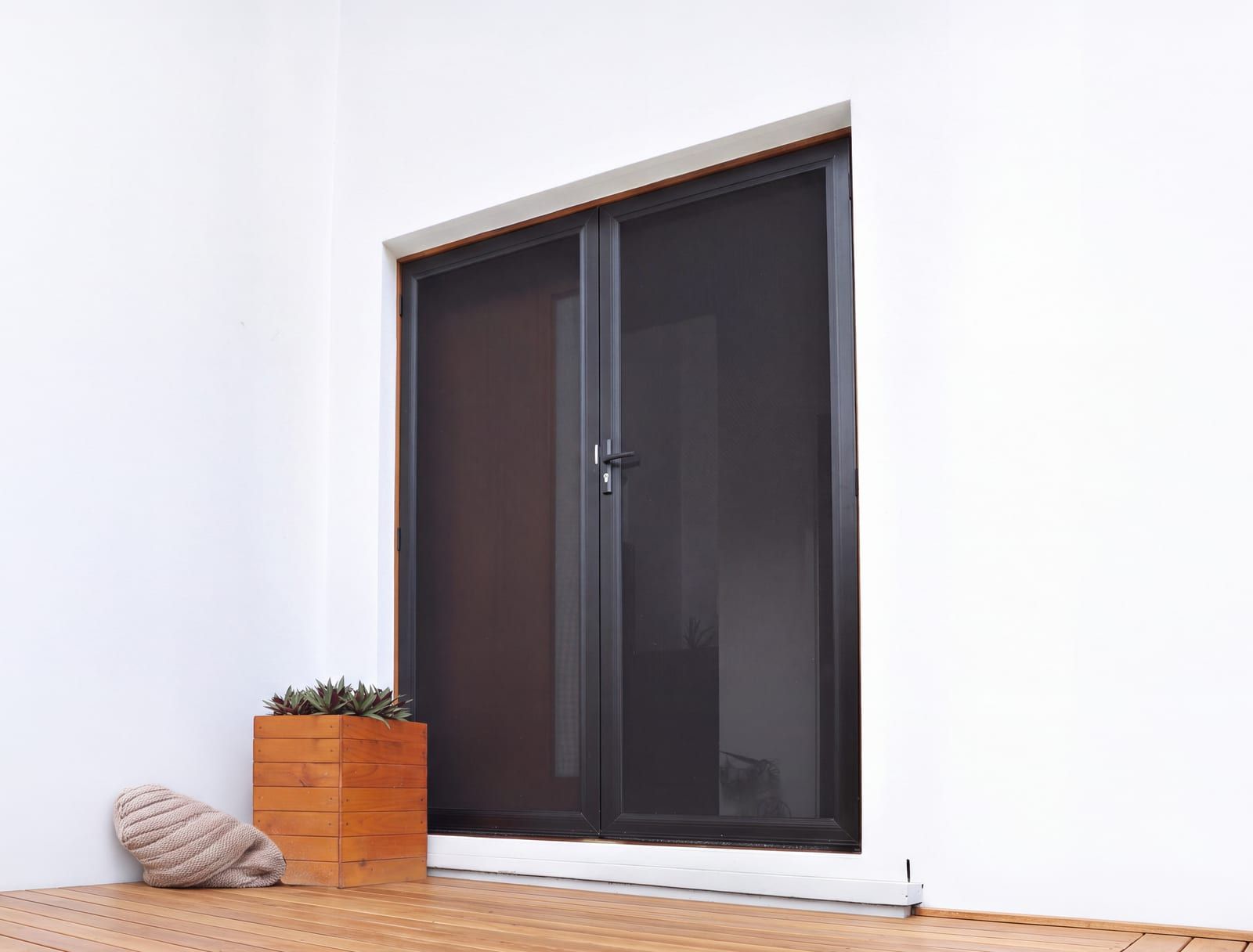
DoorsFrench Doors
Enhance your home's entrance with custom-made ScreenGuard French security doors that combine timeless elegance with premium protection.
 Doors
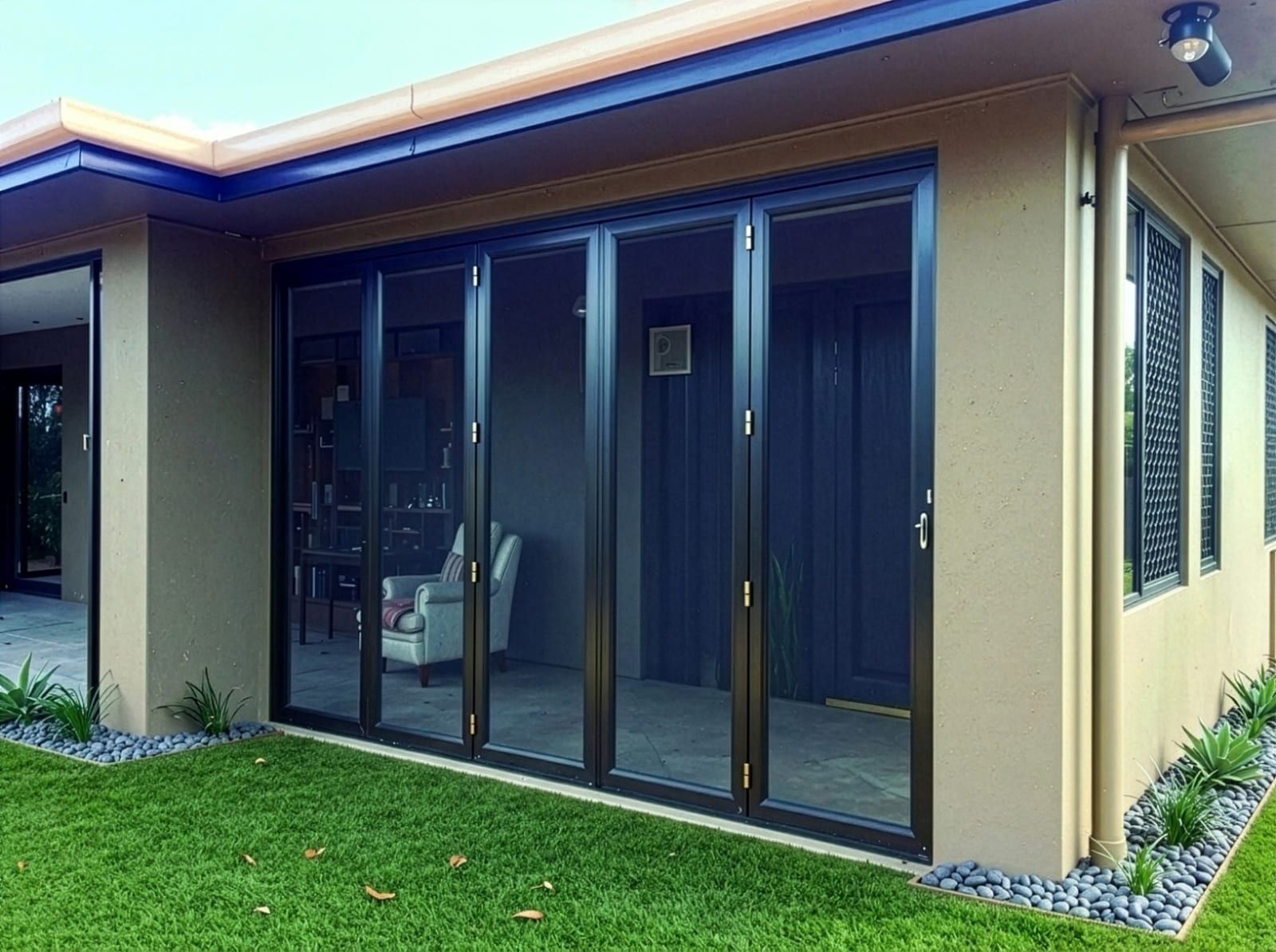
DoorsMulti-Fold Doors
Open your home to outdoor living with custom-made ScreenGuard multi-fold security doors that combine expansive openings with premium protection.
Tested & certified
Every ScreenGuard security screen door is tested against the Australian Standards that protect what matters most: impact resistance, fire safety and structural strength. It's not just designed to look the part, it's designed to perform.
Get a premium security screen door built for your home
Every home has different openings, different exposure, and different priorities: some want the maximum bushfire rating, others just want a door that won't rust near the coast. Tell us your location and door type, and we'll match you with a licensed local ScreenGuard supplier to measure and quote your premium security screen door.
Frequently asked questions
Keep your family safe inside and unwanted visitors outside with a ScreenGuard security door, custom-made to fit your home and tested to AS 5039 — the materials that hold up in Australian conditions, how the door types compare, and what changes the price, with full answers to the most common questions below.
Choosing your door5
What actually makes a door a "security screen" door, not just a flyscreen?
A flyscreen keeps insects out. A security door is built and independently tested to keep people out, and in Australia that testing is set out in AS 5039 (security doors and window grilles) and AS 5041 (the test methods behind it). None of that is visible standing in a showroom: a tested door and an untested one can use near-identical mesh and frame profiles, and the only real difference shows up on a test report. ScreenGuard's range is tested to AS 5039 and AS 5041, so it's worth asking any supplier for their result rather than taking "security" as a description at face value.
What's the best material for a security screen door in Australia?
Marine-grade 316 stainless steel is the standard for coastal and general residential use: it resists the salt air and humidity that corrode lower grades within a few years. For cyclone-prone and highly exposed sites, a heavier-gauge 304 mesh (used in ScreenGuard's Extreme range) is built for a different kind of stress: wind-borne debris rather than salt exposure. Either way, the mesh is only as strong as its retention system. ScreenGuard's WedgeMax dual-action clamp locks the mesh into a powder-coated T6 aluminium frame, so an attempted break-in has to work against the whole frame rather than prise the screen out of a channel.
Should I choose mesh, or fixed bars and grilles?
Fixed bars and grilles block the opening but don't come with the same forced-entry testing regime built around a mesh-and-frame system, and they remove airflow and outlook entirely, whether the home is occupied or not. Roller shutters solve a different problem (privacy and storm protection) but block light and view completely when closed. A tested mesh security door is the option built to be used constantly: open for airflow during the day, closed and locked at night, without giving up visibility either way.
Which door type should I choose: hinged, sliding, French or multi-fold?
Security level doesn't change between door types: a hinged, sliding, French, or multi-fold ScreenGuard door all use the same 316 mesh, frame, and locking system. What changes is how the door moves, which is really a question about the opening itself. Hinged doors suit single front, side, or back entrances and take a three-point lock. Sliding doors suit patios and balconies where a swinging door isn't practical, with rollers set up for narrow or wide tracks. French doors give a matched pair for double entrances with multi-point locking across both leaves, and multi-fold doors stack back to open a whole wall to outdoor living. None of these is more secure than another. The right choice is whichever one fits how you actually use that opening.
What sizes do security screen doors come in?
There's no fixed size range. Every ScreenGuard door is custom-built to the exact dimensions of your opening, from standard hinged doorways to wide sliding and French configurations.
Performance & safety5
Do security screen doors really stop intruders, or is that just marketing?
Tested ones do, within the limits of any physical barrier. Products certified to AS 5039 go through dynamic impact testing (simulating someone trying to kick, shoulder, or force their way through) and anti-jemmy testing, which checks whether the frame and hardware can be pried out of the opening rather than through the mesh itself. ScreenGuard's range exceeds AS 5039.3 at 200 joules of impact resistance. That's the difference between a claim and a result: one is written by a marketing team, the other by an independent test lab.
Can I still get out quickly in an emergency?
A correctly installed security door shouldn't trap anyone inside, but if a room needs a legal means of escape, a standard multi-point lock isn't always the right fit. ScreenGuard's Access Fire Escape system is built for exactly that: a quick-release mechanism that opens from inside during an emergency while the door stays locked from the outside the rest of the time. It's available as either a door or a window, for openings where egress and security both matter.
Do security screens block light, airflow or the view?
No. That's the point of choosing mesh over bars or shutters. A ScreenGuard door lets light and breeze through while keeping insects and intruders out, with nothing to obstruct the view from either side. The trade-off other systems make (full security but no outlook, or privacy but no airflow) doesn't apply to a properly tested mesh door.
Are security screen doors effective against bushfires or cyclones?
For the right product, yes. ScreenGuard's bushfire-rated screens are tested to AS 3959 and rated to BAL-40, the maximum Bushfire Attack Level, with fire attenuation of 46% at 40.2 kW/m² sustained for over three hours: enough to block radiant heat and stop embers or flame spreading between buildings. In cyclone regions, the Extreme range is tested to AS 5039.1:2023 and AS 1170.2:2021, withstanding wind-borne debris impacts up to 44 m/sec. It's one door doing three jobs: forced-entry security, insect protection, and a genuine barrier against fire or storm.
Is there a standard security screen doors need to meet in Australia?
There's no single national law mandating AS 5039 for every door sold as a "security" product, but it's the accepted benchmark the industry tests against, and many state building requirements and insurers reference it. A door with no stated AS 5039 result hasn't been tested to that benchmark, which is a different thing from a door that's failed it.
Cost, installation & care4
How much does a security screen door cost, and what changes the price?
Security doors are priced per opening, not off a shelf, so there's no single number that applies to every home. What moves the price is the door type (a multi-fold set with several panels costs more than a single hinged door), the mesh grade (Extreme mesh for cyclone regions costs more than standard 316), the frame finish, and the number of locking points the opening needs. Because every ScreenGuard door is measured and fabricated for a specific opening, the only accurate quote is one based on your actual doors and windows.
Can I install a security screen door myself?
ScreenGuard doors aren't a DIY kit. Each one is custom-measured and installed by your local licensed fabricator, to guarantee a precise fit, correct weather sealing and full warranty coverage.
How does the process work, from quote to installed door?
Every ScreenGuard security door is measured, fabricated, and installed by a licensed local supplier, not cut down from a standard size. Submit a quote request with your postcode and it's matched to your nearest supplier, who arranges an on-site measure and prepares a quote for your specific opening. Once approved, the door is fabricated to that measurement, then installed at the same opening, backed by that same 10-year warranty.
How long do security screen doors last?
It depends on the mesh, the frame, and the environment. Marine-grade 316 stainless steel in a powder-coated T6 aluminium frame is built for decades of coastal and suburban exposure. ScreenGuard backs its doors with a 10-year warranty on materials and manufacturing from the date of installation.